
Buying your first home doesn’t have to feel like solving a puzzle with missing pieces. Yes, there are steps to follow and decisions to make, but with a clear roadmap, you’ll find it’s more straightforward than you think.
Homeownership is about more than just having your own place. It’s about stability for your family, building wealth over time, and putting down roots in a community. This guide breaks down everything you need to know about homeownerhsip. Let’s get started.
According to the National Association of Realtors’ 2024 Profile of Home Buyers and Sellers report, the typical first-time homebuyer in 2024 was 38 years old, but age doesn’t matter as much as readiness. You’re ready if you have steady income, some savings for a down payment, plan to stay in the area for at least 5 years, and have decent credit.
Don’t feel pressured by what others are doing. Focus on your own financial situation and goals.

Your credit score is like your financial report card, and lenders care about it a lot. Scores range from 300 to 850. Anything above 740 gets you the best rates. Scores between 620-739 are still solid. Below 620, you’ll want to spend a few months improving it first.
To improve it, pay every bill on time, keep credit card balances low, and avoid opening new credit cards. Start this process early since real improvement takes a few months.
Quick Tip: A higher score can save you thousands over the life of your mortgage, so it’s worth the effort.
You don’t need to save a full 20% of a home’s price to buy your first house. Many first-time buyers only put down 3.5% to 5% of the purchase price, and veterans or active military members can sometimes qualify for zero down payment. For a $250,000 home, putting down 3.5% means paying just $8,750 upfront instead of $50,000. This makes homeownership much more achievable and realistic for most people.
Save in a high-yield savings account where your money grows safely. Automate transfers from every paycheck, cut unnecessary subscriptions, and put tax refunds or bonuses straight into savings.
Beyond your down payment, you’ll need money for closing costs (typically 2-5% of the home price) and an emergency fund for unexpected repairs.
A good rule: your total monthly housing payment shouldn’t exceed 28% of your income. So if you make $5,000 monthly, keep payments around $1,400 or less.
Remember that your payment includes more than just the mortgage. You’ll pay property taxes, insurance, possibly HOA fees, and should budget about 1-2% of the home’s value each year for maintenance. Use a mortgage calculator to play with different numbers and see what feels comfortable.
Pre-approval is different from pre-qualification. Pre-approval means a lender has actually verified your finances and committed to lending you money. This makes sellers take you seriously.
You’ll need tax returns, pay stubs, bank statements, and a list of your debts. The lender will explain different loan options like FHA loans (great for first-time buyers with lower down payments), VA loans (for veterans), conventional loans, and USDA loans (for rural areas).
Get pre-approved before you start seriously looking at homes. It shows you’re a real buyer, not just window shopping.
Feeling overwhelmed yet? That’s normal. This is where Hyrise comes in.
Think of Hyrise as having an expert guide who walks beside you through every step. Instead of googling questions at midnight or trying to figure out who to trust, Hyrise puts everything in one place. You get clear lessons that actually make sense, connections to real professionals who’ve been vetted for integrity, and a personalized plan based on your specific situation.
You can ask questions anytime and get real answers. Track your progress so you know exactly where you are in the journey. No confusing jargon, no pushy salespeople, just honest guidance focused on your success.
Ready to start your journey? Learn more about how Hyrise can guide you step by step toward homeownership at hyrise.app.
Make two lists: must-haves and nice-to-haves. Must-haves are non-negotiable like number of bedrooms, location, and budget. Nice-to-haves are things you’d love but can live without like a pool or updated kitchen.
Location matters enormously. You can renovate a kitchen but can’t move the house. Research schools on GreatSchools.org, check crime stats on NeighborhoodScout, and visit the neighborhood at different times. Drive the commute during rush hour.
Look for red flags like water damage, foundation cracks, or very old roofs. If a house has been sitting on the market for months, there’s usually a reason.
Your offer includes the price, earnest money (typically 1-3% showing you’re serious), contingencies that protect you, and a closing date. Your agent will show you what similar homes sold for recently so you know what’s fair.
In hot markets, you might need to offer asking price or higher. In slower markets, you can negotiate more. Consider writing a personal letter to the seller explaining why you love the home, it can make a difference when offers are close.
Include contingencies for inspection, appraisal, and financing. These let you back out if major problems show up. Most sellers will counter your offer rather than accept immediately. That’s normal. Be ready to negotiate but don’t overpay just because you love a house.
Never skip the home inspection. It costs around $300-$500 and could save you from buying a home with serious hidden problems. A professional inspector checks everything like roof, foundation, plumbing, electrical systems, HVAC, and more.
Go to the inspection and ask questions. If any issues come up, you can ask the seller to repair them, reduce the price, or even walk away if the problems are major.
Tip: Hyrise can connect you with trusted home inspectors in your area through their affiliate network so you don’t have to search on your own. Learn more here.
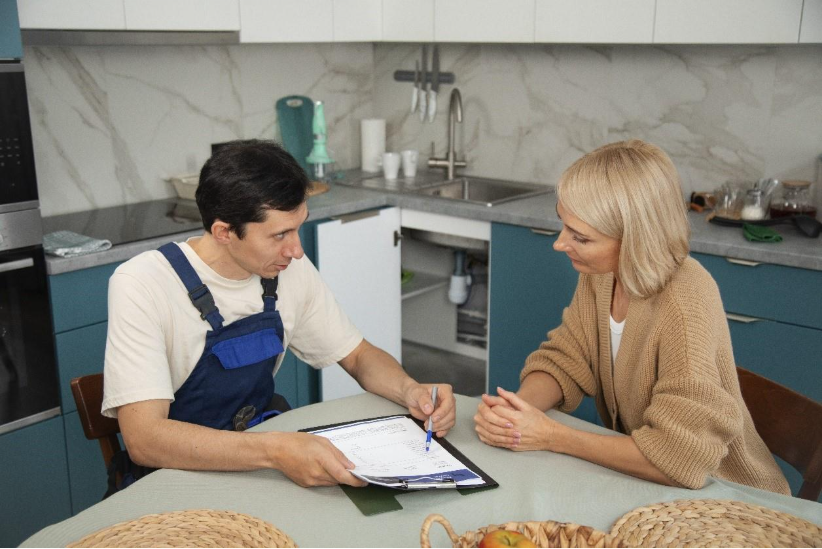
Your lender requires an appraisal to make sure the home is worth what you’re paying. An independent appraiser compares it to similar homes and determines fair value.
If the appraisal comes in lower than your offer price, you’ll need to negotiate. The seller might lower the price, you might pay extra cash, you could meet in the middle, or you can walk away if you have an appraisal contingency.
About 3 days before closing, you’ll get a Closing Disclosure showing your final numbers. Review it carefully and compare to what you were originally quoted. Closing costs run 2-5% of the home price and cover things like lender fees, title insurance, and prepaid taxes.
At closing, you’ll sign a stack of papers, pay your costs, and get the keys. The whole meeting takes an hour or two. Some closing costs are negotiable, especially in buyer-friendly markets where you can ask sellers to contribute.
Quick Tip: Read everything before closing day so you’re not seeing it for the first time when you’re nervous and rushed.
Congratulations, you got your home!
First things first: change the locks, you never know who might still have old keys. Test all smoke detectors, find your water shutoff valve, and set up your utilities.
It’s smart to budget about 1-2% of your home’s value each year for maintenance and repairing of things like fixing leaks, servicing your HVAC, or repainting. According to Bankrate, an average homeowner spends more than $8,800 a year on maintenance, so planning ahead can save you stress later.
Take photos of empty rooms for insurance purposes. Meet your neighbors. And remember, you don’t need to do everything at once. Take your time making your new home truly yours.
From checking your credit to unpacking boxes, Hyrise supports you through it all. Their educational resources make confusing topics simple. Their vetted professionals actually care about helping first-time buyers succeed. Their personalized plans adapt to your unique situation.
When you’re comparing mortgage rates, Hyrise connects you with trustworthy lenders. When you’re ready to make offers, their screened real estate agents guide your negotiations. When you’re reviewing closing documents, you can ask questions and get clear answers.
Everything happens in one place. Your progress is tracked. Your questions get answered. No hidden agendas, just real partnership focused on getting you into your home successfully.
Your dream home is closer than you think. Visit hyrise.app to explore how Hyrise helps first-time buyers make confident, informed decisions every step of the way.
Buying your first home doesn’t have to be overwhelming. Keep these tips in mind, plan carefully, and take it step by step and you’ll be well on your way to making your homeownership dream a reality. The best part? You don't have to figure it all out alone. Hyrise was built specifically to guide first-time buyers through every single step. From education to professional connections to personalized planning, everything you need lives in one simple app.
Most first-time buyers put down 3.5–5% plus closing costs. On a $200,000 home, that’s about $11,000–$20,000. Some programs (VA, USDA) require less, and down payment assistance can help too.
You’ll need at least 580 for FHA loans, but 620+ gives better rates. A score of 740+ unlocks the best deals.
Usually 2-4 months from search to keys. Getting pre-approved early can speed things up.
No! Many loans need only 3-5%, and some even 0%. You’ll just pay mortgage insurance until you hit 20% equity.
Pre-qualified is a rough estimate; pre-approved means a lender verified your info. Always get pre-approved before you shop.
There’s no perfect time, what matters is that you’re ready: steady income, good credit, and savings for the costs ahead.
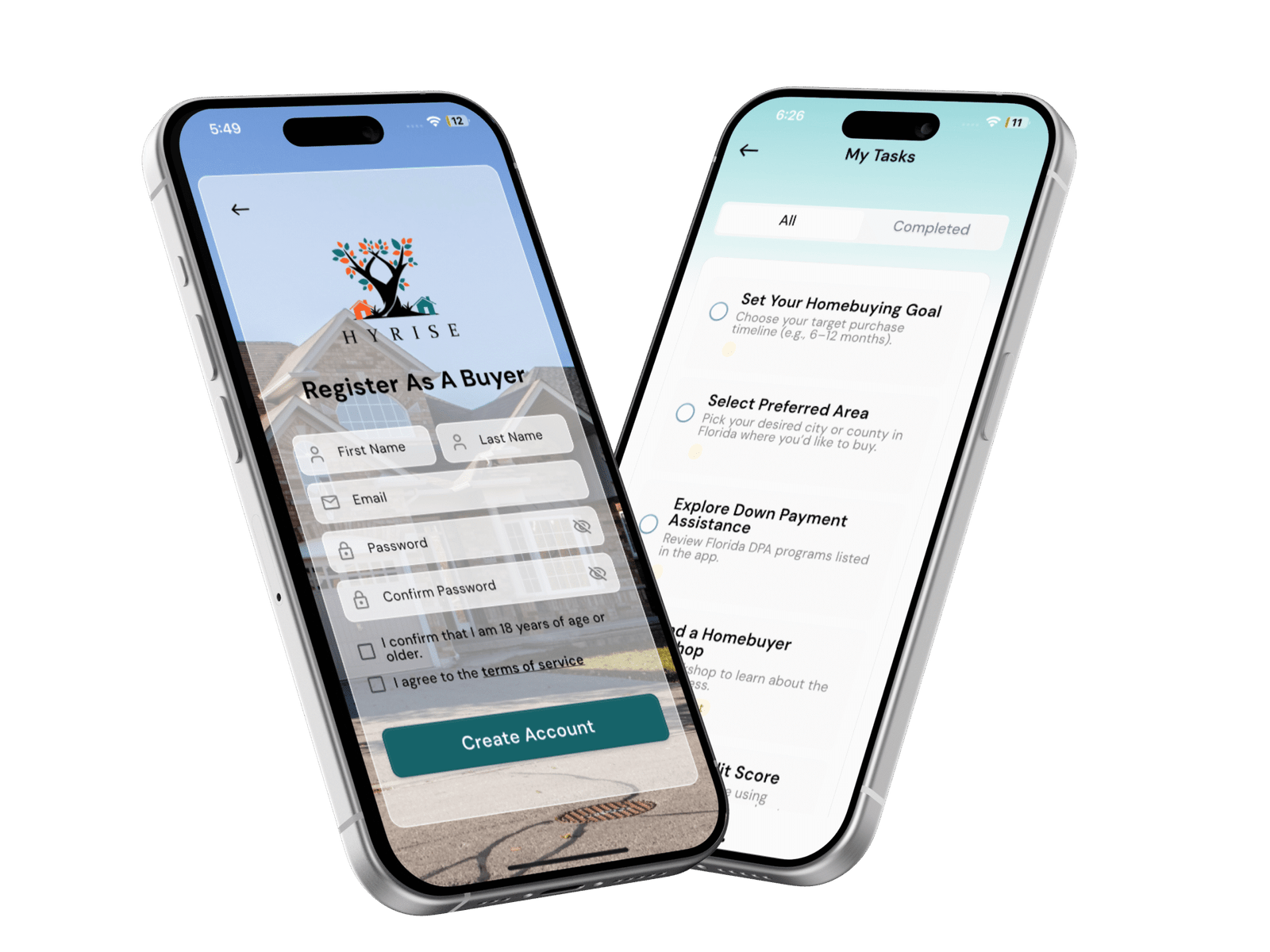
Your dream of owning a home is closer than you think. Take control of your journey with the guidance and support you deserve. Download the Hyrise Community Housing app to begin your home buying process today!



Hyrise Community Housing helps first-time buyers move from “where do I start?” to keys-in-hand. Learn the steps, plan your path, and connect with vetted pros all in one simple app.
Copyright © 2026 Hyrise | Powered by DevDefy | All Rights Reserved